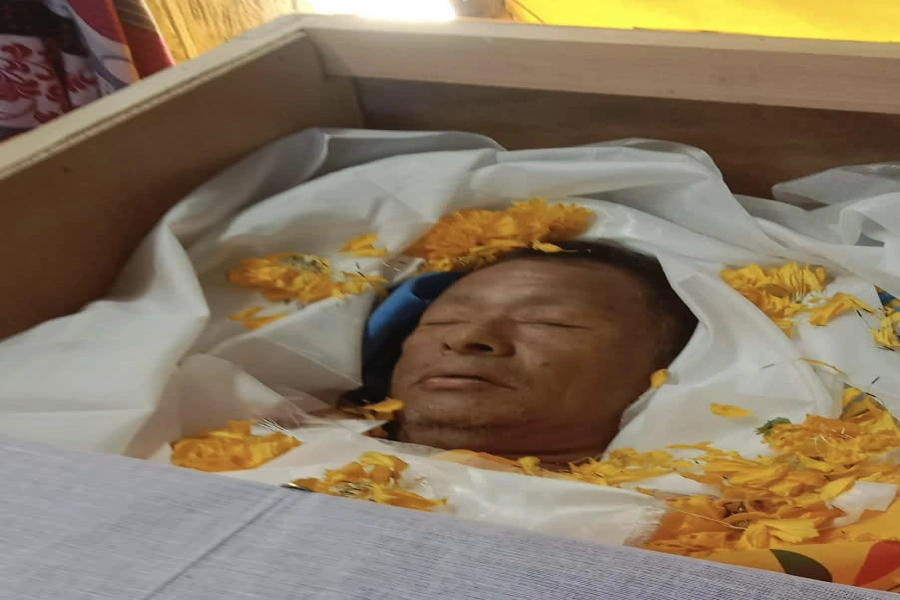
KATHMANDU, Dec 23: A global advocacy group has called for an immediate, transparent and impartial investigation into the death of Sha Bahadur Gurung, one of 31 political prisoners held in Bhutanese jails.
Gurung, 65, was found dead inside his cell at Chamgang Central Prison in Thimphu on December 15, 2025.
In a press release, the Global Campaign for the Release of Political Prisoners in Bhutan (GCRPPB) said it was “deeply shocked and profoundly saddened” by Gurung’s death and demanded unconditional release of all remaining political detainees in Bhutan.
“The circumstances surrounding his death raise grave questions about custodial negligence, prolonged abuse and the responsibility of the state,” GCRPPB said in the statement.
Gurung, a permanent resident of Bhutan’s Chirang region, was arrested in 1990 while serving in the Royal Bhutan Army. He was accused of participating in peaceful protests and was sentenced to life imprisonment.
Desperate search for missing girls as nearly 80 dead in Texas f...

For more than three decades, he was held primarily at Rabuna Prison in Wangdue Phodrang, a facility widely regarded by rights groups as notorious for harsh, inhuman and opaque detention conditions.
According to family members and other credible sources based in the US and elsewhere, Gurung endured “severe physical and psychological torture” throughout his incarceration. The statement alleges that he was repeatedly beaten, humiliated, placed in solitary confinement and subjected to other forms of inhuman treatment by prison authorities.
Relatives further claimed that Gurung was once told by security personnel that “a death sentence has already been issued against you, but instead of killing you immediately, you will be tortured to death gradually in custody.” The family believes decades of abuse and the denial of timely medical care left his health critically weakened, ultimately leading to his death, GCRPPB said.
As his condition deteriorated sharply, Gurung was transferred from Rabuna Prison to Chamgang Central Prison in early December 2025, where he had been held since December 10. Even during the transfer, he was allegedly denied necessary medical treatment and monitoring.
According to accounts from relatives, Gurung ate dinner normally on the evening of December 14 and went to sleep without showing any unusual symptoms. However, on the morning of December 15, he was found unconscious inside his cell, appearing “almost lifeless.”
Although on-duty police were informed immediately, authorities reportedly failed to respond in a timely manner. By the time he was taken to a nearby health post, he had already died, the family said. He was later referred to a hospital in Thimpu, which relatives allege was an attempt to suggest he was still alive during the transfer, despite claims that he had died before being removed from the prison.
Gurung’s death came just two days before Bhutan’s 118th National Day on December 17, an occasion when families, supporters and human rights defenders had hoped political prisoners might be released through a royal amnesty. Instead, the death of one of the longest-serving political detainees has sparked grief, anger and serious concern.
“This tragedy represents the extreme consequence of decades of abuse and neglect endured in state custody,” the campaign quoted Gurung’s relatives as saying.
In the press release GCRPPB strongly condemned the treatment of Gurung and described his death as “deeply disturbing,” saying it starkly contradicts Bhutan’s international image built around the principles of Gross National Happiness, compassion and mindfulness.
The group urged the Bhutanese government to launch an immediate, thorough and transparent investigation into Gurung’s death, form an independent external inquiry committee, make its findings public, and provide appropriate compensation to the family for the irreparable loss.
It also called on authorities to formally recognize the late Gurung as a Bhutanese martyr who dedicated his life to human rights and justice and to ensure his family is treated with dignity, provided legal, social and financial support and granted due recognition and compensation for his suffering and sacrifice.
Reiterating its demand for the immediate and unconditional release of all political prisoners in Bhutan, the campaign appealed to the international community, human rights organizations and diplomatic missions to closely monitor the situation and take necessary steps to ensure accountability, human rights and justice.


_20240829165847.jpg)