KATHMANDU, Feb 13: Three prominent global human rights organizations have called on all political parties participating in Nepal’s upcoming parliamentary election to commit to ending impunity for human rights abuses and corruption by upholding the rule of law, including completing the transitional justice process.
In a joint press statement, Human Rights Watch, Amnesty International, and the International Commission of Jurists said Nepal’s interim government, led by Prime Minister Sushila Karki, should publish the report of the Gen Z probe commission, as well as all previous judge-led inquiry reports into human rights violations and abuses that were never made public by earlier governments.
“Successive Nepali governments have buried reports containing recommendations that could have led to justice and reform, ignoring their findings,” said Meenakshi Ganguly, Deputy Asia Director at Human Rights Watch. “The Karki government has a unique opportunity to dismantle the culture of impunity by publishing all reports documenting violations against protesters and participants in people’s movements.”
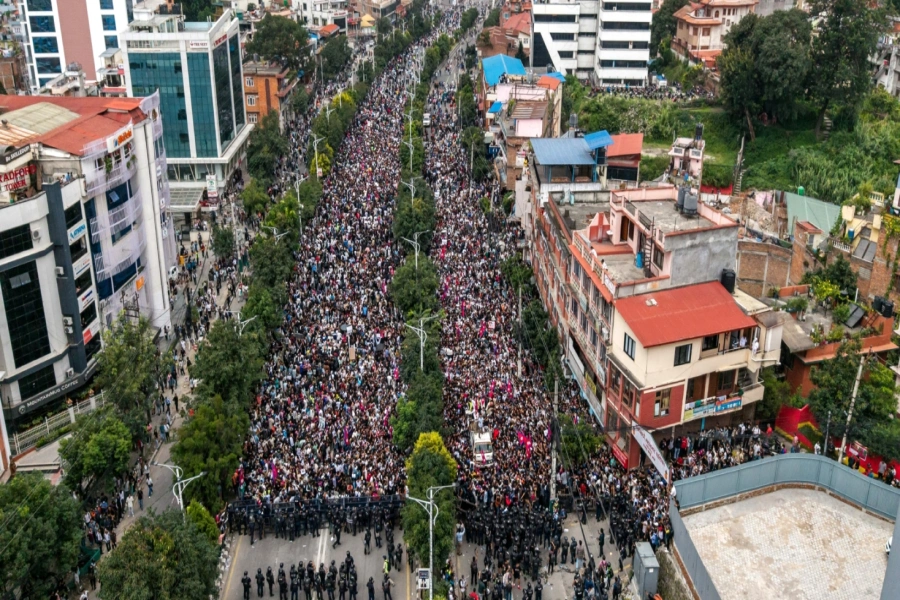
At least 76 people were killed—most unlawfully—during the September 8–9 Gen Z protests, when police opened fire on young demonstrators protesting government corruption and a social media ban. On the second day of the protests, killings were reported by both security forces and protesters, alongside widespread arson of public and private buildings.
HR bodies call for protecting judicial independence as lawyers...

Following the unrest, then-Prime Minister K.P. Oli resigned on September 9. Sushila Karki, a former chief justice, was appointed interim prime minister on September 12 with a mandate to conduct elections. She also established a commission to investigate the September 8–9 violations.
Since the start of Nepal’s democratic era in 1990, several inquiry commissions have been formed after serious violations, but none have published their findings, contributing to a culture of impunity and fueling repeated human rights violations and official corruption, the organizations said.
After the 1990 People’s Movement, the Malik Commission’s findings on lethal violence against protesters were buried. In 2006, following a second People’s Movement, the Rayamajhi Commission report—documenting at least 19 protester deaths—was similarly suppressed. In 2015, the Lal Commission, tasked with investigating about 45 deaths during protests against the new constitution, also failed to release its report despite repeated promises. Numerous other official reports on rights violations since 1990 remain unpublished.
Following the September 2025 Gen Z protests, a commission chaired by former Justice Gauri Bahadur Karki (no relation to the interim prime minister) was formed to investigate the incidents. Its February 9 deadline was extended beyond election day over concerns that findings could face opposition from security forces or political actors and spark “friction” in the election environment.
In October, Prime Minister Karki said the Gen Z movement reflected “people’s profound aspiration for good governance, economic opportunity, and integrity in public life.” The protests largely stemmed from young people’s frustrations over economic stagnation caused by misgovernance and endemic political corruption.
“One reason Nepal has been trapped in cycles of weak governance and human rights violations is that impunity has been hardwired into elite politics. Prime Minister Karki can take a historic step to reverse that trend by releasing all the reports,” said Isabelle Lassée, Deputy Regional Director for South Asia at Amnesty International. “Addressing ongoing impunity for abuses during the 1996–2006 insurgency requires that all parties commit to advancing transitional justice in line with international standards, including addressing victims’ concerns about accountability gaps and political manipulation.”
Nepal’s internal armed conflict between Maoist rebels and security forces claimed more than 20,000 lives, amid widespread violations by both sides. The 2006 Comprehensive Peace Agreement included commitments to hold perpetrators accountable, provide reparations, and reveal the fate of victims of enforced disappearance. However, political interference has repeatedly stalled justice.
In 2024, Nepal’s parliament amended transitional justice laws to remove provisions that could have granted amnesty to individuals responsible for serious crimes under international law. While some survivors accepted these amendments as a viable basis to proceed, in 2025 many victims’ representatives rejected appointments to transitional justice bodies as flawed, unqualified, and lacking independence, leaving the process largely deadlocked.
Victims of crimes committed during Nepal’s internal conflict are still awaiting justice and reparations. “To break the cycle of impunity and build a future based on the rule of law, the interim government should publish all official reports on past human rights violations before leaving office,” said Mandira Sharma, Asia and Pacific Regional Director at the International Commission of Jurists. “Political parties aspiring to lead Nepal after the election must commit to pursuing justice for corruption and human rights abuses, while considering the voices of victims and civil society.”


-1200x560-1783685616.webp)