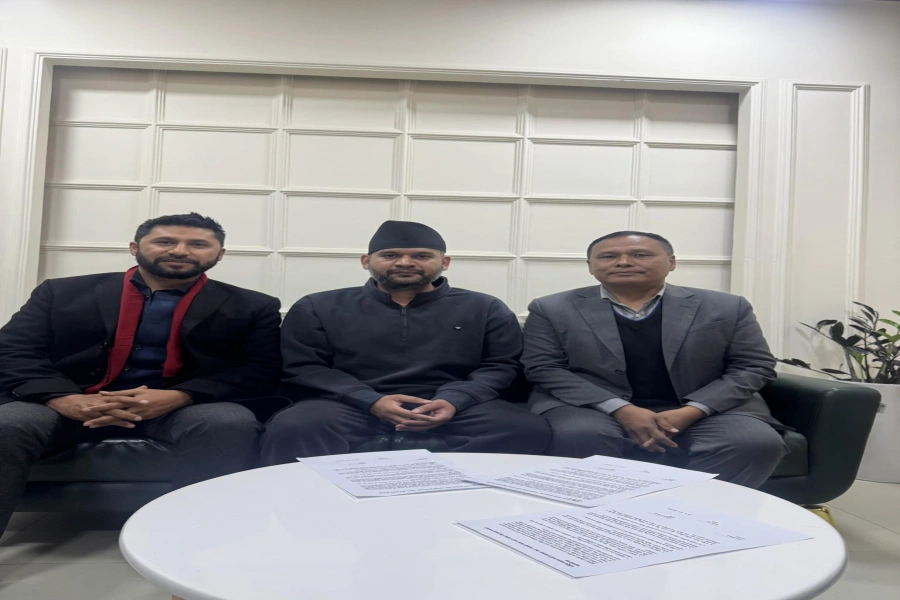
KATHMANDU, June 1: Kulman Ghising, chairperson of the Ujyalo Nepal Party and former managing director of the Nepal Electricity Authority, has strongly criticized Prime Minister Balendra Shah’s remarks suggesting that widespread use of induction cooktops could cause transformers and substations to “blow up.”
Ghising said the statement does not align with technical realities, arguing that Nepal’s power system has significantly strengthened after the end of load-shedding through massive investments in transmission and distribution infrastructure.
He said the country now operates substations with a capacity of over 14,000 MVA and distribution transformers exceeding 5,000 MVA, along with transmission lines of 132 kV, 220 kV, and 400 kV. He added that underground and modernized distribution systems in the Kathmandu Valley are also nearing completion.
The Kulman Ghising Legacy and an Uncertain Future

Ghising argued that electricity demand does not surge uniformly across households, making system-wide failure or transformer explosions unrealistic. He also noted that consumers are already using induction stoves, heaters, electric vehicles, and charging stations, and that the system is capable of handling growing demand with proper management.
In a detailed statement, Ghising also criticized the government’s decision to impose 5 percent VAT on electricity consumption above 50 units per month in the upcoming budget, calling it contrary to global practice and Nepal’s energy transition goals.
He said many countries are encouraging higher electricity consumption to promote clean energy, while Nepal’s move risks discouraging electrification. He stressed that electricity infrastructure is built precisely to support rising demand, not to justify taxation through fear of system failure.
Ghising further argued that the VAT revenue will go to the state treasury rather than directly improving the Nepal Electricity Authority’s services or infrastructure. He warned that the tax could make electricity more expensive and limit future efforts to make power more affordable for consumers.
Calling electricity a key driver of Nepal’s clean energy future, Ghising urged the government to reconsider the tax decision and ensure that public statements on energy are based on facts and technical evidence.