

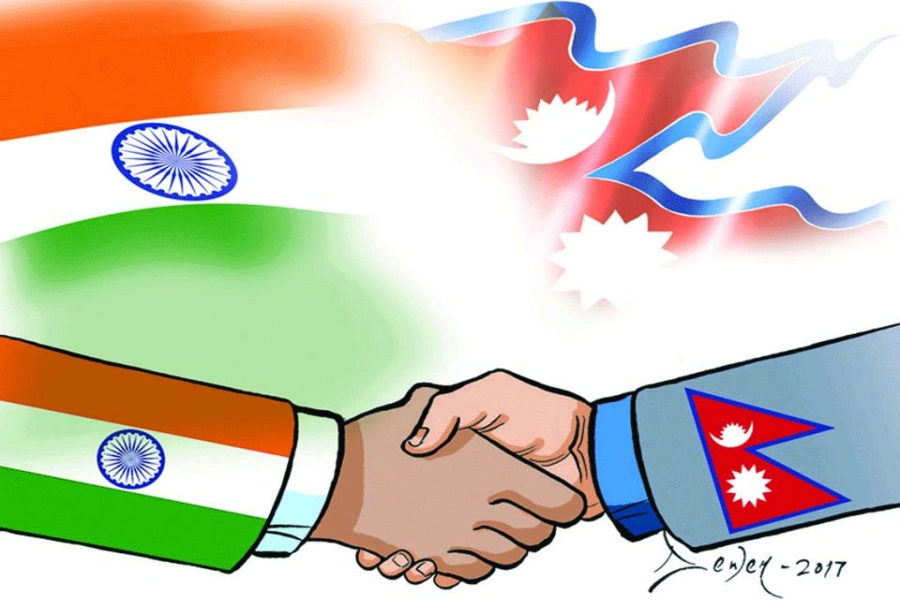
The meeting between Nepal’s Foreign Minister Shisir Khanal and India’s External Affairs Minister Dr. S. Jaishankar in New Delhi on June 6 may not have dominated headlines across South Asia, but it could prove to be one of the most consequential diplomatic engagements between the two countries this year. At a time when regional politics is increasingly shaped by uncertainty and geopolitical competition, Nepal and India appear to be quietly building momentum around a relationship rooted not in grand declarations but in practical cooperation.
The discussions covered trade, connectivity, energy cooperation, water resources, sports diplomacy and regional issues. More importantly, both sides reviewed the progress of ongoing projects and committed themselves to accelerating implementation. The outcomes were tangible. India announced the operationalisation of person-to-person cross-border digital payments, handed over 72 health sector and 12 cultural sector reconstruction projects completed after the devastating 2015 earthquake, and launched a new partnership between Kathmandu University and India’s Digital Public Infrastructure ecosystem focused on language technology and artificial intelligence.
These are not symbolic gestures. They are concrete examples of how the Nepal-India partnership is evolving to meet the needs of the twenty-first century.
The significance of Khanal’s visit extends beyond the announcements themselves. During his time in New Delhi, he also met India’s National Security Adviser Ajit Doval. The meeting highlighted the growing strategic dimension of the relationship and underscored the importance both countries attach to regional stability, border management, security cooperation and emerging geopolitical challenges. The fact that Nepal’s foreign minister was engaging not only India’s diplomatic leadership but also its top national security official reflected the depth and maturity of the dialogue now taking place between the two neighbours.
This follows another important development. Just days earlier, Rastriya Swatantra Party Chairman Rabi Lamichhane undertook a high-profile visit to India where he met Prime Minister Narendra Modi, Home Minister Amit Shah, External Affairs Minister Dr. S. Jaishankar and National Security Adviser Ajit Doval. The breadth of these engagements sent a clear signal. India is not merely engaging Nepal through traditional channels but is actively building relationships with the country’s new generation of political leaders.
Taken together, the visits of Khanal and Lamichhane reveal a broader reality. Nepal and India are entering a new phase of engagement characterised by openness, confidence and a willingness to focus on future opportunities rather than past disagreements.
It is against this backdrop that one important question emerges: should Nepal’s Prime Minister Balen Shah visit India soon?
The answer is an emphatic yes.
Kathmandu’s new Mayor Balen Shah’s wife says - “From my Balen,...
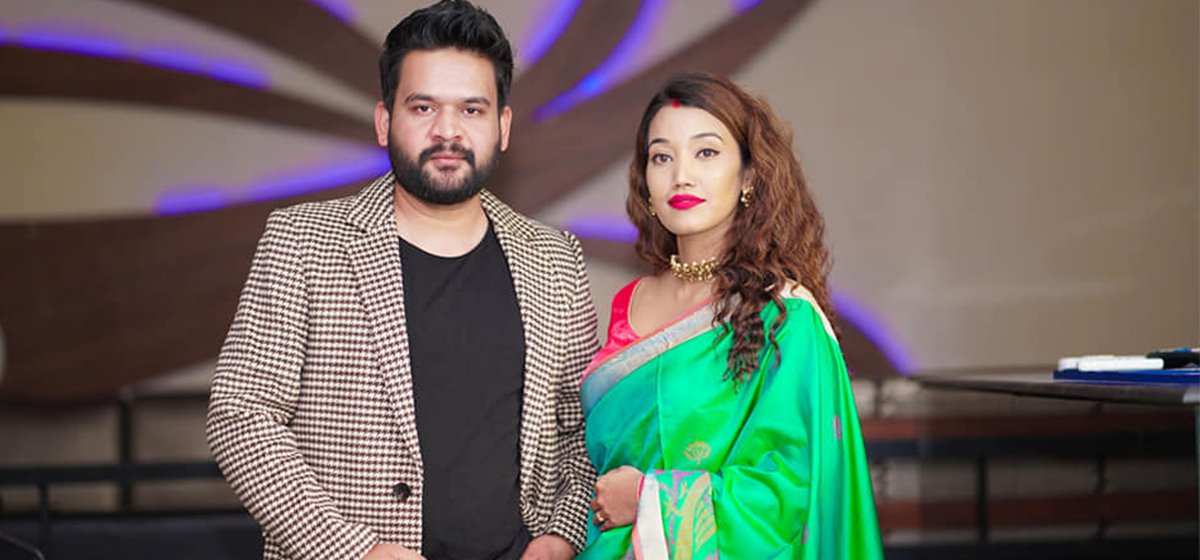
Balen Shah’s rise to the highest office in Nepal represents one of the most remarkable political stories in South Asia in recent years. Having first emerged as the independent Mayor of Kathmandu and a symbol of political change, he went on to lead a wider movement that captured the imagination of young voters across Nepal. His success reflected a growing public desire for accountability, transparency, efficient governance and a break from the old political order.
Today, as Prime Minister, Balen Shah enjoys a unique position. He represents not just a political party but a generational shift in Nepal’s politics.
That is precisely why his engagement with India matters.
A visit to India would not be about diplomatic protocol or ceremonial optics. It would be about defining the future trajectory of Nepal’s most important bilateral relationship.
India remains Nepal’s largest trading partner, one of its biggest investors, a major development partner and the destination for millions of Nepali workers, students and pilgrims. The two countries share an open border, deep cultural ties and centuries of civilisational interaction. No other relationship has a greater impact on Nepal’s economic future.
At the same time, Nepal is undergoing a profound transformation. The country’s aspirations are increasingly centred around infrastructure development, economic growth, technological advancement, energy exports and job creation. Achieving these goals will require stronger regional connectivity and deeper economic integration.
This is where India becomes indispensable.
One of the most promising areas of cooperation is energy. Nepal possesses enormous hydropower potential while India represents one of the world’s largest and fastest-growing energy markets. Cross-border electricity trade has already emerged as a major success story, generating revenues for Nepal and helping meet regional energy demands. Greater cooperation in transmission infrastructure and power trading could become a cornerstone of Nepal’s economic growth strategy.
Digital cooperation presents another opportunity. The operationalisation of cross-border digital payments announced during Khanal’s visit is a significant breakthrough. Millions of Nepalis travel, work, study or conduct business in India every year. Seamless payment systems will make their lives easier while creating new opportunities for commerce, tourism and entrepreneurship.
Similarly, cooperation in artificial intelligence, digital public infrastructure, innovation and startup ecosystems could provide Nepal with access to technologies and platforms that accelerate development. India’s success in creating scalable digital public goods has attracted attention from governments around the world. Nepal has every reason to learn from and collaborate with this experience.
There is also a broader political argument for a Balen Shah visit.
For too long, discussions about Nepal-India relations have often been dominated by disputes, grievances and moments of friction. While such issues are important and deserve careful attention, they should not define a relationship built on geography, culture and shared history.
Millions of people cross the border every year without visas. Thousands of Nepali students study in Indian institutions. Families are connected across both countries. Pilgrims travel between sacred sites in Nepal and India. Economic interdependence continues to deepen with each passing year.
The challenge today is not preserving the relationship. It is modernising it.
Prime Minister Balen Shah is uniquely positioned to do exactly that. As a leader associated with reform, innovation and a younger generation of Nepalis, he has the credibility to articulate a fresh vision for bilateral ties—one based not on dependency or suspicion but on partnership and shared prosperity.
Recent developments suggest that New Delhi is ready for such a conversation. The meetings involving Rabi Lamichhane, Shisir Khanal, Dr. Jaishankar and Ajit Doval demonstrate a clear willingness to engage Nepal’s new leadership. Political channels are open. Strategic dialogue is expanding. Economic cooperation is growing.
The natural next step is leadership-level engagement.
A visit by Prime Minister Balen Shah to India would not merely be another diplomatic event on the calendar. It would provide an opportunity for both governments to establish a roadmap for cooperation in energy, connectivity, trade, digital innovation, education, tourism and regional stability.
Most importantly, it would signal that Nepal and India are prepared to move beyond the occasional disputes of the past and focus on the immense opportunities of the future.
The foundations have already been laid. The momentum is building. The atmosphere is constructive.
Now is the time for Prime Minister Balen Shah to take the next step and visit India. Such a visit could help shape the next chapter of one of South Asia’s most important and enduring relationships.





