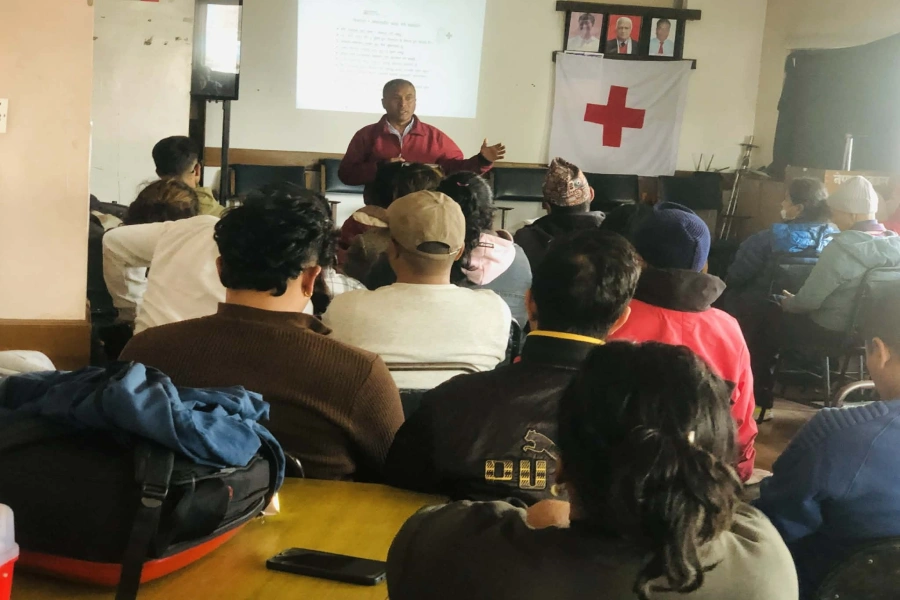
KATHMANDU, July 24: The Nepal Red Cross Society (NRCS), Kathmandu District Chapter, on Friday concluded its first aid training program across all 32 wards of Kathmandu Metropolitan City (KMC), wrapping up a 100-day initiative with an assessment meeting attended by trainers, officials and Red Cross representatives.
The program, conducted with financial and logistical support from KMC and technical assistance from the NRCS Kathmandu chapter, trained 737 people after an agreement was signed between the two sides on March 19, 2026. Seventeen certified first aid trainers were mobilized for the campaign, which covered all wards of the metropolitan city.
Speaking at the event, KMC Spokesperson Nabin Manandhar praised the Kathmandu chapter for successfully completing the training within the planned timeframe. Although the city had initially targeted around 800 participants, he said training 737 people was still an encouraging achievement.
Manandhar, who also serves as chair of Ward No. 17, said some ward offices had yet to fully recognize first aid training as a basic public health activity. He said the metropolitan city would continue encouraging all ward offices to give greater priority to such programs.
All about World Red Cross Day 2019

He also announced that KMC has allocated Rs 5 million for health-related programs, which will help expand first aid initiatives in the future. During the program, Manandhar presented letters of appreciation to all 17 trainers.
NRCS Kathmandu District Chapter Chair Shyam Kaji Dotel said completing training in all 32 wards within 100 days marked an important milestone. He acknowledged that running such a large-scale program could involve some shortcomings and called for feedback from KMC to further improve future training.
Dotel thanked KMC, particularly spokesperson Manandhar and Health Department Chief Dipak Kumar KC, for partnering with the Red Cross. He expressed hope that the collaboration would continue in the coming years.
He also shared that women made up the overwhelming majority of participants. Of the 737 trainees, 571 were women and 166 were men.
NRCS Central Committee member Prem Lama urged authorities to provide first aid kits to trained participants so they can respond effectively during emergencies. He also encouraged people to report any activities that violate humanitarian principles.
KMC Health Department Chief Dipak Kumar KC said the city would continue the training program. He added that the health department and the NRCS Kathmandu chapter would organize orientation sessions to address issues raised by trainers and participants.
Bagmati Province NRCS General Secretary Ramji Paudel described the initiative as an effective way to strengthen community preparedness and save lives. While the Red Cross is widely recognized for disaster response, rehabilitation, eye care, and blood services, he said first aid training has become one of its core community programs and deserves continued support.
Representatives from all 21 NRCS sub branches under the Kathmandu chapter attended the assessment meeting. Trainers recommended expanding participation in future sessions, while some suggested shortening the current four-day training to help maintain participants' interest.