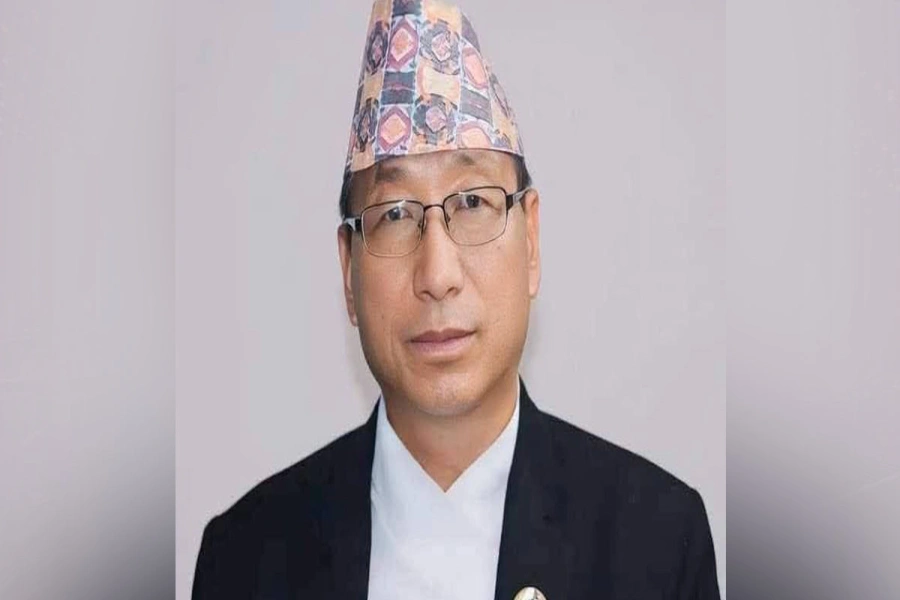
Criticised for his prolonged silence in Parliament, Prime Minister Balen Shah finally addressed the federal legislature on Sunday. However, rather than easing concerns, his remarks sparked a fresh controversy, particularly over Nepal's sensitive border issues with India. Opposition lawmakers, already frustrated by what they see as their marginalisation in Parliament, strongly objected to his statement that “Nepal has also encroached upon Indian land.” Border experts, former diplomats and members of civil society were equally taken aback. This is perhaps the first time a Nepali prime minister—or any senior government official—has publicly suggested that Nepal has encroached upon Indian territory. The reaction is understandable. For decades, Nepal has consistently maintained that India encroaches upon territories it has maintained as its own as per the Sugauli Treaty that defines Nepal’s border with India. At the same time, successive Nepali governments have never officially argued that Nepal has similarly encroached upon Indian land. Consequently, the Prime Minister’s remarks were widely perceived as a departure from Nepal’s long-established position on the issue. Recognising the confusion, the Ministry of Foreign Affairs (MoFA) moved swiftly to clarify the Prime Minister’s statement. According to the ministry, he was referring to instances of cross-border occupation and cultivation in the Dashgaja, the no-man’s land along the open Nepal-India border. The MoFA explained that historical settlement patterns, geographical realities and the application of the Fixed Boundary Principle in riverine areas have created situations in which citizens of one country use or cultivate land that technically falls within the jurisdiction of the other.
Prime Minister Shah is one of Nepal’s most prominent political figures, and his words carry significant weight. Unsurprisingly, Indian media outlets gave extensive coverage to his remarks, amplifying their impact far beyond Nepal’s borders. The episode serves as a reminder that issues involving sovereignty, national security and foreign relations demand exceptional care. In diplomacy, words matter. Sensitive subjects require precision, preparation and restraint. A statement delivered in Parliament can shape public opinion, influence diplomatic discourse and, in some cases, affect bilateral relations. This controversy also underscores the importance of sustained parliamentary engagement. Had Prime Minister Shah participated more regularly in parliamentary debates, he might have developed a deeper appreciation of the nuances and responsibilities that come with speaking on matters of national importance. Parliament is not merely a platform for political contestation; it is also an institution where leaders sharpen their judgment, face scrutiny and refine their understanding of complex issues. Political leadership requires continuous learning, and public office demands constant awareness of the consequences of one’s words. As the MoFA clarification made clear, it is not unusual for residents on either side of the open border to cultivate land or utilise resources that extend marginally beyond the officially demarcated boundary. Such situations are fundamentally different from state-sponsored territorial encroachment. They are localised issues arising from the unique characteristics of the Nepal-India border and are generally addressed through technical and administrative mechanisms.
Budget for FY 2024/25: Strive for Fiscal Realism

The MoFA also reiterated that Nepal’s official position remains unchanged. The government continues to seek the resolution of outstanding disputes in areas such as Limpiyadhura, Lipulek, Kalapani and Susta through diplomatic dialogue and mutual consultation. Joint technical teams from both countries are already working on matters related to border pillars, Dashgaja encroachment and cross-border occupation. On questions of sovereignty and territorial integrity, Nepal’s Parliament has traditionally spoken with one voice. That national consensus is one reason the Prime Minister’s remarks attracted such widespread attention and concern. It also explains why the issue resonated so strongly in Indian media. To his credit, Prime Minister Shah emphasised that border-related issues should be resolved through dialogue and in a spirit of friendship. That remains the only sustainable path forward. However, effective diplomacy begins with disciplined communication at home. The Prime Minister would do well to engage with opposition leaders, clarify any lingering misunderstandings and draw lessons from this episode. As Nepal navigates an increasingly complex geopolitical environment, it requires leadership that combines confidence with caution, and conviction with restraint. In diplomacy, restraint is not a sign of weakness; it is a hallmark of maturity. This controversy should serve as a timely reminder that the higher the office, the greater the responsibility to choose words carefully.Prime Minister Balen Shah’s remarks on the Nepal–India border have triggered controversy and clarification, underscoring the critical need for diplomatic precision, restraint, and maturity in matters of sovereignty and foreign relations.
Criticised for his prolonged silence in Parliament, Prime Minister Balen Shah finally addressed the federal legislature on Sunday. However, rather than easing concerns, his remarks sparked a fresh controversy, particularly over Nepal's sensitive border issues with India. Opposition lawmakers, already frustrated by what they see as their marginalisation in Parliament, strongly objected to his statement that “Nepal has also encroached upon Indian land.” Border experts, former diplomats and members of civil society were equally taken aback. This is perhaps the first time a Nepali prime minister—or any senior government official—has publicly suggested that Nepal has encroached upon Indian territory. The reaction is understandable. For decades, Nepal has consistently maintained that India encroaches upon territories it has maintained as its own as per the Sugauli Treaty that defines Nepal’s border with India. At the same time, successive Nepali governments have never officially argued that Nepal has similarly encroached upon Indian land. Consequently, the Prime Minister’s remarks were widely perceived as a departure from Nepal’s long-established position on the issue. Recognising the confusion, the Ministry of Foreign Affairs (MoFA) moved swiftly to clarify the Prime Minister’s statement. According to the ministry, he was referring to instances of cross-border occupation and cultivation in the Dashgaja, the no-man’s land along the open Nepal-India border. The MoFA explained that historical settlement patterns, geographical realities and the application of the Fixed Boundary Principle in riverine areas have created situations in which citizens of one country use or cultivate land that technically falls within the jurisdiction of the other.
Prime Minister Shah is one of Nepal’s most prominent political figures, and his words carry significant weight. Unsurprisingly, Indian media outlets gave extensive coverage to his remarks, amplifying their impact far beyond Nepal’s borders. The episode serves as a reminder that issues involving sovereignty, national security and foreign relations demand exceptional care. In diplomacy, words matter. Sensitive subjects require precision, preparation and restraint. A statement delivered in Parliament can shape public opinion, influence diplomatic discourse and, in some cases, affect bilateral relations. This controversy also underscores the importance of sustained parliamentary engagement. Had Prime Minister Shah participated more regularly in parliamentary debates, he might have developed a deeper appreciation of the nuances and responsibilities that come with speaking on matters of national importance. Parliament is not merely a platform for political contestation; it is also an institution where leaders sharpen their judgment, face scrutiny and refine their understanding of complex issues. Political leadership requires continuous learning, and public office demands constant awareness of the consequences of one’s words. As the MoFA clarification made clear, it is not unusual for residents on either side of the open border to cultivate land or utilise resources that extend marginally beyond the officially demarcated boundary. Such situations are fundamentally different from state-sponsored territorial encroachment. They are localised issues arising from the unique characteristics of the Nepal-India border and are generally addressed through technical and administrative mechanisms.
The MoFA also reiterated that Nepal’s official position remains unchanged. The government continues to seek the resolution of outstanding disputes in areas such as Limpiyadhura, Lipulek, Kalapani and Susta through diplomatic dialogue and mutual consultation. Joint technical teams from both countries are already working on matters related to border pillars, Dashgaja encroachment and cross-border occupation. On questions of sovereignty and territorial integrity, Nepal’s Parliament has traditionally spoken with one voice. That national consensus is one reason the Prime Minister’s remarks attracted such widespread attention and concern. It also explains why the issue resonated so strongly in Indian media. To his credit, Prime Minister Shah emphasised that border-related issues should be resolved through dialogue and in a spirit of friendship. That remains the only sustainable path forward. However, effective diplomacy begins with disciplined communication at home. The Prime Minister would do well to engage with opposition leaders, clarify any lingering misunderstandings and draw lessons from this episode. As Nepal navigates an increasingly complex geopolitical environment, it requires leadership that combines confidence with caution, and conviction with restraint. In diplomacy, restraint is not a sign of weakness; it is a hallmark of maturity. This controversy should serve as a timely reminder that the higher the office, the greater the responsibility to choose words carefully.